Every fall, millions of parents drop their children off at college campuses across the country. They help unpack dorm rooms, attend orientation sessions, and eventually drive away with a knot in their stomachs and a single overriding concern: will my child be safe? Campus safety is not an abstract concept. It is the number one factor, ahead of academics, cost, and campus culture, that parents cite when evaluating universities. And the data shows that one of the most impactful things a university can do to improve safety is also one of the simplest: provide reliable late-night transportation.
The Scope of the Problem
Crime on college campuses is a persistent reality. According to the U.S. Department of Education's Campus Safety and Security database, there were over 28,000 criminal offenses reported on college campuses in 2019, including roughly 10,000 cases of forcible sex offenses, 5,800 burglaries, and 3,200 aggravated assaults. These are reported numbers; the actual incidence is almost certainly higher, as campus crime is notoriously underreported.
The majority of these incidents share a common factor: they occur at night. A 2018 analysis by the Clery Center found that approximately 62% of campus criminal offenses occur between 8 PM and 4 AM. The correlation is intuitive. Darkness reduces visibility, alcohol consumption increases vulnerability, and the hours between midnight and 3 AM are when students are most likely to be walking alone across campus after leaving a library, a party, or a friend's apartment.
Walking alone at night is the single most common scenario in campus sexual assault cases. The Department of Justice's National Crime Victimization Survey consistently shows that the majority of campus assaults occur outdoors, in transit between locations, during nighttime hours. This is not a problem that can be solved with better lighting alone, though that helps. It requires giving students a viable alternative to walking.
How Safe-Ride Programs Reduce Incidents
Safe-ride programs, also called late-night shuttle or safe-transport programs, provide students with free or low-cost transportation during evening and overnight hours, typically from 8 PM or 9 PM until 2 AM or later. These programs take many forms: fixed-route buses, on-demand vans, ride-hailing partnerships, and app-based shuttle services like Slidr's FSU Safe Ride program at Florida State University.
The evidence that these programs reduce safety incidents is compelling:
- A study published in the Journal of American College Health found that campuses with active safe-ride programs reported 14% fewer nighttime assaults than comparable campuses without such programs.
- The University of Michigan's SafeRide program, one of the oldest in the country, has been credited with a sustained 20% reduction in nighttime walking-related incidents since its expansion in 2015.
- At Florida State University, the introduction of the FSU Safe Ride program coincided with a measurable decrease in nighttime incident reports in the areas served by the program. While correlation is not causation, campus safety officials have pointed to the program as a key factor in the improvement.
The mechanism is straightforward. When students have a reliable, free, and easy way to get home at night, they use it instead of walking. Fewer students walking alone at night means fewer opportunities for crimes of opportunity. It also means fewer incidents of students accepting rides from strangers or making other risky transportation choices.
FSU Safe Ride at FSU: A Model Program
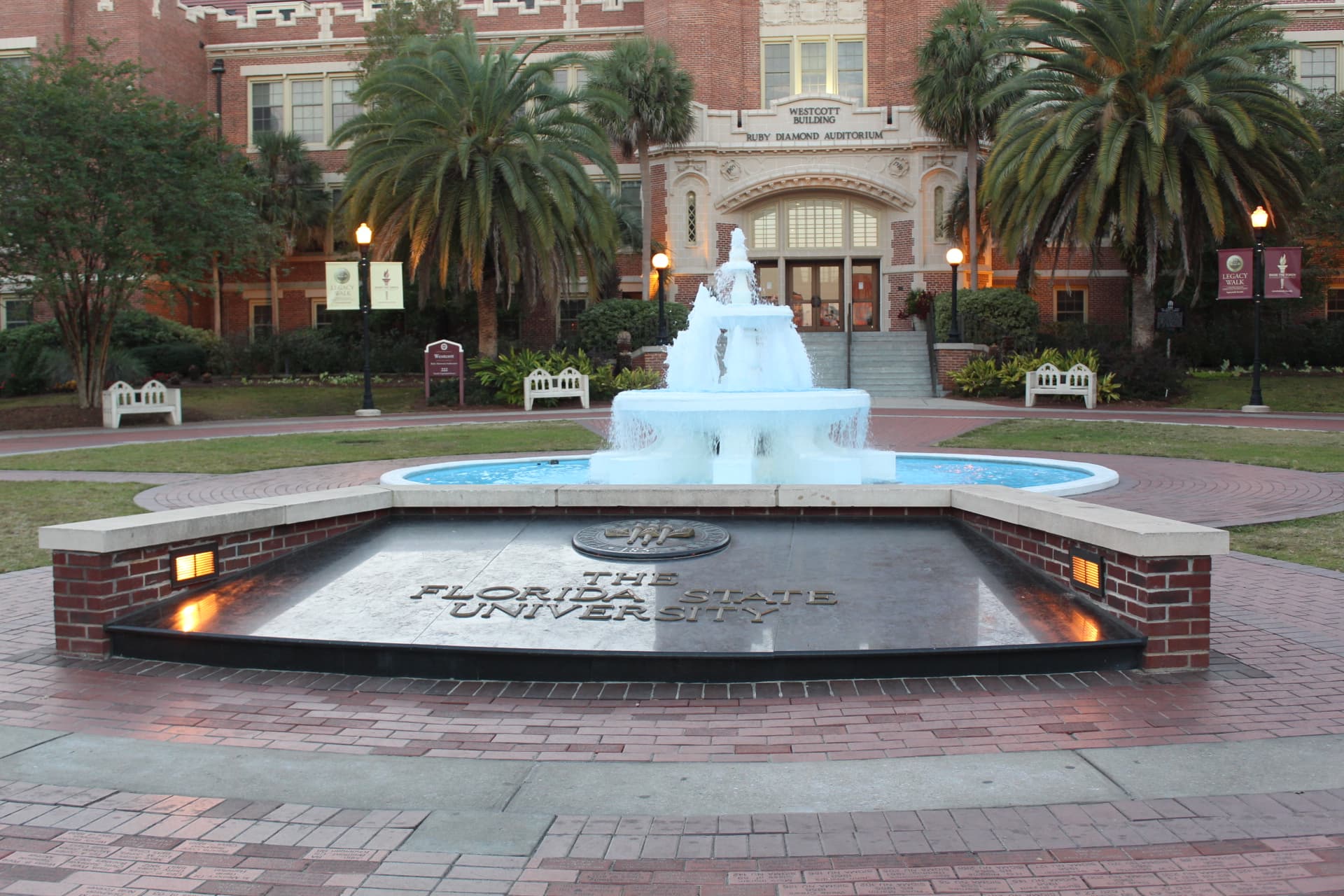
Florida State University's FSU Safe Ride program, operated in partnership with Slidr, is one of the most successful campus safe-ride programs in the Southeast. The program provides free, on-demand electric shuttle rides to FSU students during nighttime hours, covering the campus and the surrounding student housing areas.
Students request rides through the Slidr app using their FSU credentials. Average wait times are under six minutes, and the service runs seven nights a week during the academic year. In its first full year, FSU Safe Ride provided over 45,000 rides. Student surveys showed that 78% of riders would have walked alone had the service not been available, and 91% reported feeling safer on campus because of the program.
What makes FSU Safe Ride effective is not just the transportation itself but the design. The service is on-demand, not fixed-route, meaning students get picked up where they are, not at a bus stop three blocks away. The app provides real-time tracking so riders can see exactly when their shuttle will arrive. Drivers are professionally trained, background-checked Slidr employees, not student volunteers working late shifts. And the electric vehicles are clean, quiet, and non-intimidating, an important factor in encouraging students to use the service.
The Clery Act and Institutional Accountability
The Jeanne Clery Disclosure of Campus Security Policy and Campus Crime Statistics Act requires all colleges and universities that participate in federal financial aid programs to disclose information about crime on and near their campuses. Institutions must publish an Annual Security Report, maintain a public crime log, and issue timely warnings about crimes that pose ongoing threats to students.
Clery Act compliance is not optional, and the consequences of non-compliance are severe. Fines can reach $62,000 per violation, and several universities have faced fines exceeding $1 million. Beyond financial penalties, Clery violations generate devastating publicity that can affect enrollment and donor confidence for years.
Safe-ride programs directly support Clery Act compliance in two ways. First, they reduce the number of reportable incidents by reducing the conditions that lead to incidents. Second, they demonstrate institutional commitment to student safety, which is increasingly scrutinized by the Department of Education during compliance reviews. A university that invests in a robust late-night transportation program is making a documented, proactive effort to protect students, and that matters when regulators come knocking.
What Parents Should Look For
Parents evaluating campus safety should look beyond the published crime statistics (which can be misleading due to reporting inconsistencies) and ask specific questions about the university's transportation infrastructure:
- Does the university offer a late-night transportation program? What hours does it operate?
- Is the program free for all students, or are there fees or restrictions?
- Is the program on-demand (students request rides from their current location) or fixed-route (students must walk to designated stops)?
- What is the average wait time during peak hours (Thursday through Saturday nights)?
- Are drivers professional employees or student volunteers?
- Does the program cover off-campus housing areas where many upperclassmen live?
- How many rides does the program provide per year, and what is the trend (growing or declining)?
A strong answer to these questions signals a university that takes student safety seriously, not just in policy statements but in operational investment.
The Cost of Inaction
Universities that do not offer late-night transportation are not saving money. They are deferring costs. Every preventable incident that occurs because a student had no safe way home carries financial consequences: legal liability, counseling services, Title IX investigations, Clery Act reporting obligations, and reputational damage. A single high-profile incident can cost a university millions in legal fees and settlements, to say nothing of the human cost.
A comprehensive late-night shuttle program costs a fraction of what a single serious incident costs to manage. It is not just a safety investment. It is a risk management strategy, a recruitment tool, and a demonstration of institutional values. The universities that understand this are the ones that parents and students should be choosing.